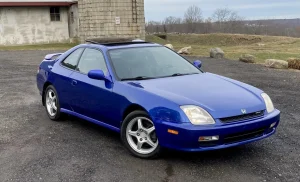
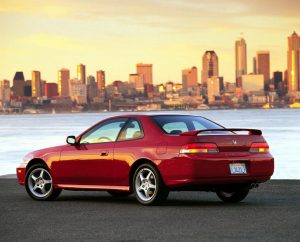
Many moons ago there was a small, efficient, 2+2 coupe from Honda. Ok, more than one, but there was the one – the 5th generation, 1997-2001 Honda Prelude Type SH. For an affordable price, you got efficiency, comfort, practicality, Honda reliability and one hell of a little powerplant – a 2.2L, inline 4 with Honda’s fabled VTEC (variable valve timing with electronic control) – throwing out about 195-200hp depending on the model year. It was standard with a snick-snickety smooth (5-speed) manual gearbox, low effort but talkative steering (a traditional Honda hallmark, even on some models today), and some creature comforts such as automatic climate control. No, not a Bentley in that department, but you couldn’t expect much more for the price – about $26,100 to start for the 2001 Type SH (and make no mistake, that was the one to get). In today’s dollars, that would be just shy of $50 large – the average transaction price of a new car today. The Prelude was excellent for the money, but for $50K, it would be a tougher pill to swallow these days.
Ok so not stripper Civic cheap, but specifically on the Type SH were some engineering advances that you may recognize today: “SH” stood for “Super Handling,” which Honda has applied to various Acura models in the context of their AWD systems today. In essence, it allows the inside and outside wheels on the axle to spin at different ratios rather than one fixed ratio. In essence, even in a front wheel drive vehicle with economy car roots, it can allow more precise turn-in and apex control without pushing – aka torque steer. You’d be paying attention if you recognize an evolution of this system today on the Honda Civic Type R and Acura Integra Type S (both driving better than any FWD car should have any right to). On the Prelude, it was novel, and combined with its lightweight chassis but upright proportions, made it exceptionally fun and practical for a little runabout.
Sadly, times have changed in more ways than one, and the 5th gen Prelude’s sales slipped from the get-go. The rise of SUVs and what we now call “crossovers” – even small ones, like Honda’s own CR-V – had begun.
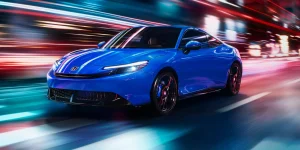
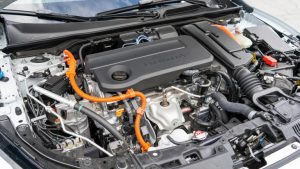
Which brings us to the present. When Honda announced there’d be a 6th-generation model of the Prelude, some enthusiast like yours truly were cautiously optimistic. They told us it would be a hybrid, a more complex powertrain setup combining electric and petrol motors, which until the past few years did not tend to lend itself to driver’s cars. The recently hybridized 992.2 generation 911 and Ferrari 296 may have changed this, at least at the higher end of the spectrum. Would Honda be able to pull its old magic out of the drawer with the 2026 Prelude?
Well, turns out, not exactly. And that is unfortunate, because the vehicle presented – which like the last Prelude, also looks a bit…let’s say, “generic” – has the makings of what could be a proper redux of the old Prelude magic. Except that it isn’t. And the main culprit is in fact not the electric/gas combination, but rather the gearbox Honda settled on for this edition. The bad news is it’s a CVT, which you may know stands for “continuously variable transmission.” CVTs have been around for a few decades now, and they’ve definitely been improved upon. In essence, a CVT uses a belt-driven system to precision-tune the ratios on the fly. Unlike a fixed-ratio manual or auto slushbox, they operate on the theory that any given combination of torque and wheelspin should be met with a specific, adjustable transmission ratio. All fine, except in practice. You’ll recognize CVTs if you’ve driven a modern Subaru or the previous few generations of Nissan Rogue, for example. In these applications, when driven enthusiastically, the result is a buzzy little engine note that holds a specific RPM for a comparably long time. Nissan in particular has had issues with CVTs failing far too quickly and has paid out in the hundreds of millions of dollars for repairs and replacements via a few class action lawsuits. Honda, to your author’s knowledge, has not encountered this same problem. But its basic CVTs exhibit the same problems that other OEMs’ boxes produce when giving the keys to someone who likes to drive – or, hell, even someone who wants to quickly get up to speed to merge or pass on the freeway.
Honda gave enthusiasts some hope, though. We were later told the 6th gen Prelude would be CVT, yes, but it would have something called “S+ Shift,” which would use software to mimic a conventional gearbox’s feel when swapping gears. Would it produce the same magic as their trick “SH” front differential in the last Prelude? Sadly, the answer to that seems to be “no.” Even with software designed to “feel, hear and see” (Honda’s words) performance-minded shifts, it misses the mark. It is not a replacement for a well-tuned fixed ratio ‘box – like yours truly has experienced with all CVTs, even the best ones.
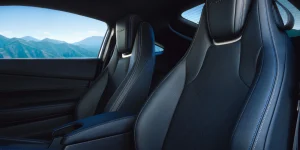
The upside is when driven as a getaround, point A-B little commuter car, the Prelude is very good. It’s quiet, comfortable, surprisingly practical (2+2 layout remains), and thrifty on the wallet – it even takes regular unleaded, something the old mill shunned for premium. But while the engine is quite good, it – and the whole experience – is let down by the choice of a CVT. So when driven around 8/10ths or more, the Prelude’s shortcomings jump out at you. Especially when, for the same money, you can get a Subaru BRZ/Toyota 86, or even a Miata – if practicality for hauling people and stuff aren’t your highest priorities.
